WiMAXはいくつかの会社(プロバイダ)が独自のキャンペーンで提供されています。
選択肢が多いと言えば聞こえは良いのですが、いざ選ぶとなったときにこれだけあるとどこが良いのか悩みますよね…実際に私もWiMAXを契約しようと思ったときにプロバイダ選びに随分悩みました。ただ、外で自分専用Wi-Fiを持ちたいだけなのに。。
それならばと、これまでWiMAXのプロバイダを比較・検討してきた情報をまとめることにしました!これからWiMAXの契約を考えてる方が私のように悩み、調べまわる時間を過ごさずに済むような手助けになればと思います。
このページにたどり着いたあなたは既にいろんなサイトでWiMAXについて調べてきているかもしれません。
こちらでは極力最低限必要な情報に絞ってWiMAXのキャンペーンや製品、料金プランをご紹介します。
各プロバイダのより詳細な情報を比較する前に、まずはWiMAXの全体像をこちらでザックリと掴んでみてください。
申し込みさえ完了すれば、あとは快適なインターネット生活が待っています。
※この記事もWiMAXにつないで書いていますが、この高速通信を知ってしまうとWiMAXのない外先のネット通信は考えられません!
WiMAX申し込みの3ステップ

いざWiMAXを使おうと思ったら、申し込み前に決めるべきことが3つあります。それがプロバイダ、製品、料金プラン。
スマホを買うときの状況に当てはめると
プロバイダ…ドコモ?ソフトバンク?au?
製品…iPhone?XPERIA?GALAXY?
料金プラン…かけ放題?データは何GB?
といったイメージをしていただければ分かりやすいかと思います。
スマホの契約に比べたらWiMAXは選択肢が少なくシンプル!ひとつひとつ順番に決めていけば難しいことはありません。
…ちなみにWiMAXの通信エリア確認がまだの場合はUQ WiMAX公式でご確認を!
せっかく届いても圏外だったら悲しいですよね…
UQ WiMAXでは無料で15日間お試し利用することが可能!
その後、UQ WiMAXで申し込むことが条件というわけでもないのでお試し利用しつつ契約プロバイダを探すと良いでしょう。
プロバイダを決める

WiMAXはどのプロバイダで契約しても通信速度やエリアは同じです。
違いは各プロバイダで実施されているキャンペーンや料金、独自オプション。
ここでは数十社ある中から目的別にオススメなプロバイダのみをご紹介します。
各社いろんな形でキャンペーンを実施していますが、
見るべきポイントの1つは「このプロバイダでは、結局のところ総額いくらになるのか」ということ。
どれだけキャッシュバックが高くても月額基本料金が高く設定されていれば意味ないですよね。
(※こちらには載せていませんがそういったプランを提供する会社も実際にあります…)
そのため、2年間使い続けた場合の料金目安も載せました!!
※初期費用+端末代+月額料金×24ヶ月(日割月も満額仮定で計算)-キャンペーン還元
ギガ放題とFlatの違いについてはプラン選びのところでより詳しくまとめています。
【auユーザー必見】
auユーザー限定ですが、WiMAXとのセット割で毎月最大934円割引されます。
プロバイダにより対応可否異なるのですが下記紹介プロバイダはすべて対象です!
GMOとくとくBB=キャッシュバック最高額
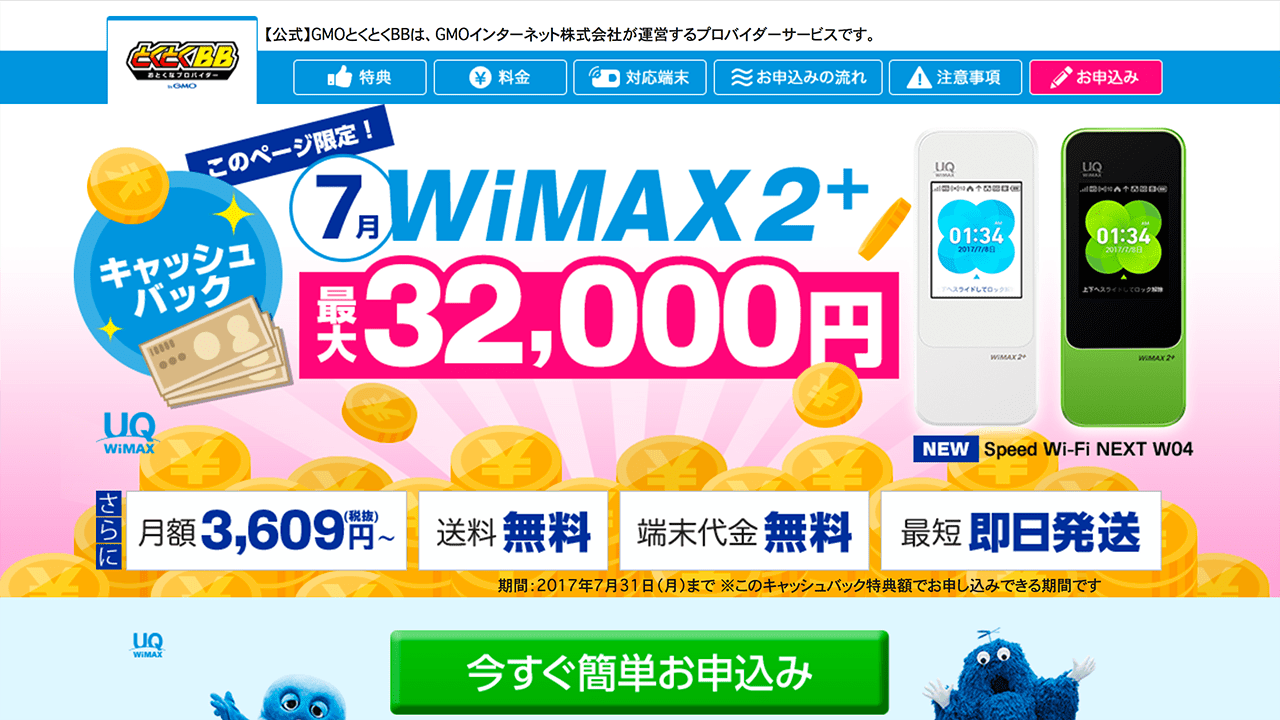
GMOとくとくBBは毎月3万円近い高額キャッシュバックキャンペーンを実施していることで有名なプロバイダです。
キャッシュバック受け取りは約1年後となっていますが、2年間総額で見ると一番安く抑えられます。
| プラン/データ量 | 月額料金 | 2年間総額 | そのほか |
|---|---|---|---|
| ギガ放題 上限ナシ |
4,263円 | 75,613円 | 初月日割 翌2ヶ月3,609円 |
| ライトプラン 月7GB |
3,609円 | 61,225円 | 初月日割 |
BIGLOBE WiMAX 2+=月額料金最安
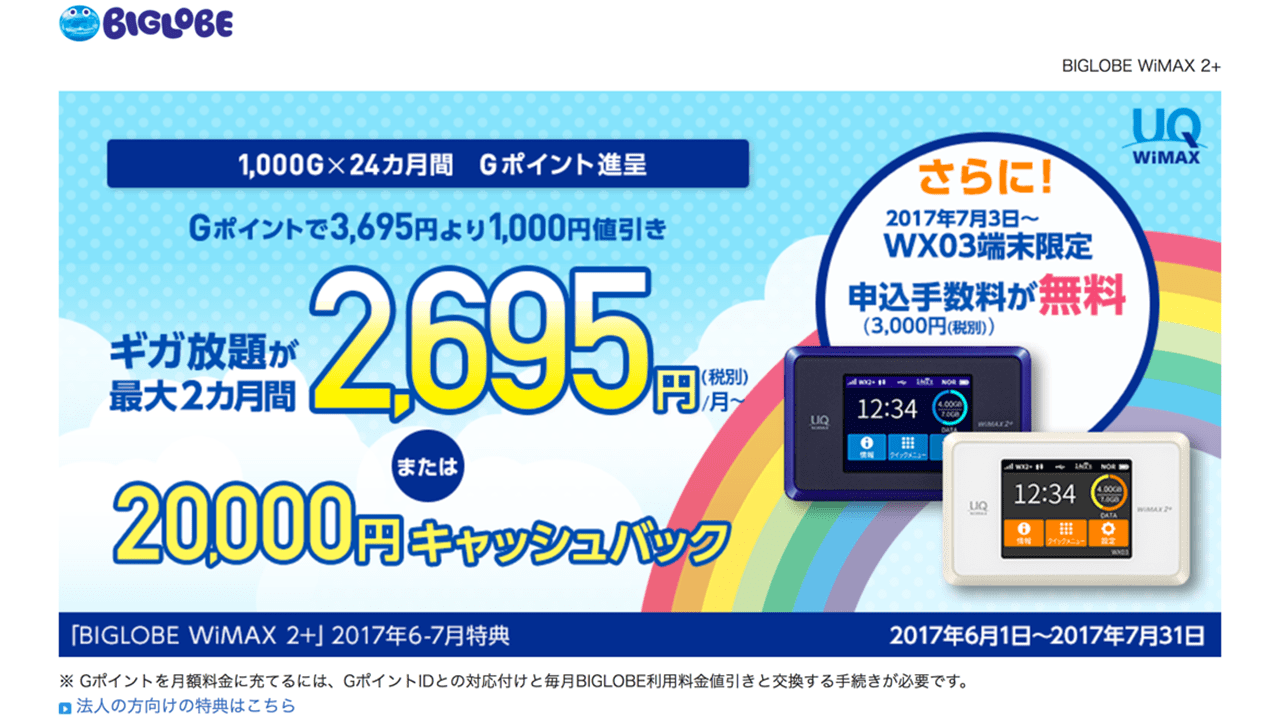
高額キャッシュバックの代わりに毎月の料金を割引することで維持費を抑えるプロバイダも。
その中でもBIGLOBE WiMAX 2+は毎月1000円分割引という高還元率。
※BIGLOBEにもキャッシュバック特典(20,000円)もありますが、還元率はこちらの割引のほうが高いです。
| プラン/データ量 | 月額料金 | 2年間総額 | そのほか |
|---|---|---|---|
| ギガ放題 上限ナシ |
3,380円 Gポイント適用 |
79,750円 | 初月無料 翌2ヶ月2,695円 |
| Flat(3年) 月7GB |
2,695円 Gポイント適用 |
64,680円 | 初月無料 3年契約のみ |
UQ WiMAX=WiMAX本家でサポート重視
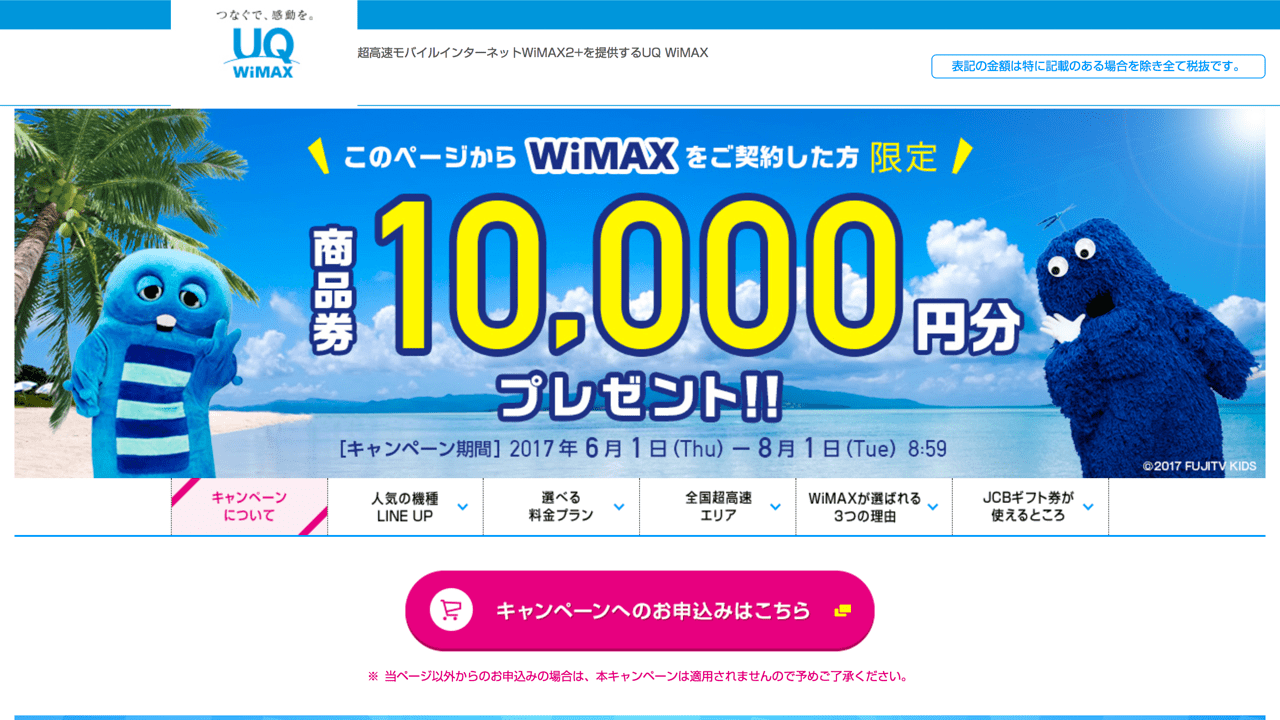
数あるWiMAXサービスのプロバイダの中で本家であるのがこのUQ WiMAX。
他プロバイダに比べるとキャッシュバックや料金還元はそこまで多くないものの充実のサポートやオプションは本家だからこそ!
初めてWiMAX(Wi-Fiルーター)を使うので、料金よりもサポートを重視したい人は本家が安心。
| プラン/データ量 | 月額料金 | 2年間総額 | そのほか |
|---|---|---|---|
| ギガ放題 上限ナシ |
4,380円 | 103,248円 | 初月日割 翌2ヶ月3,696円 |
| Flat 月7GB |
3,696円 | 88,200円 | 初月日割 |
製品(ルーター)を決める
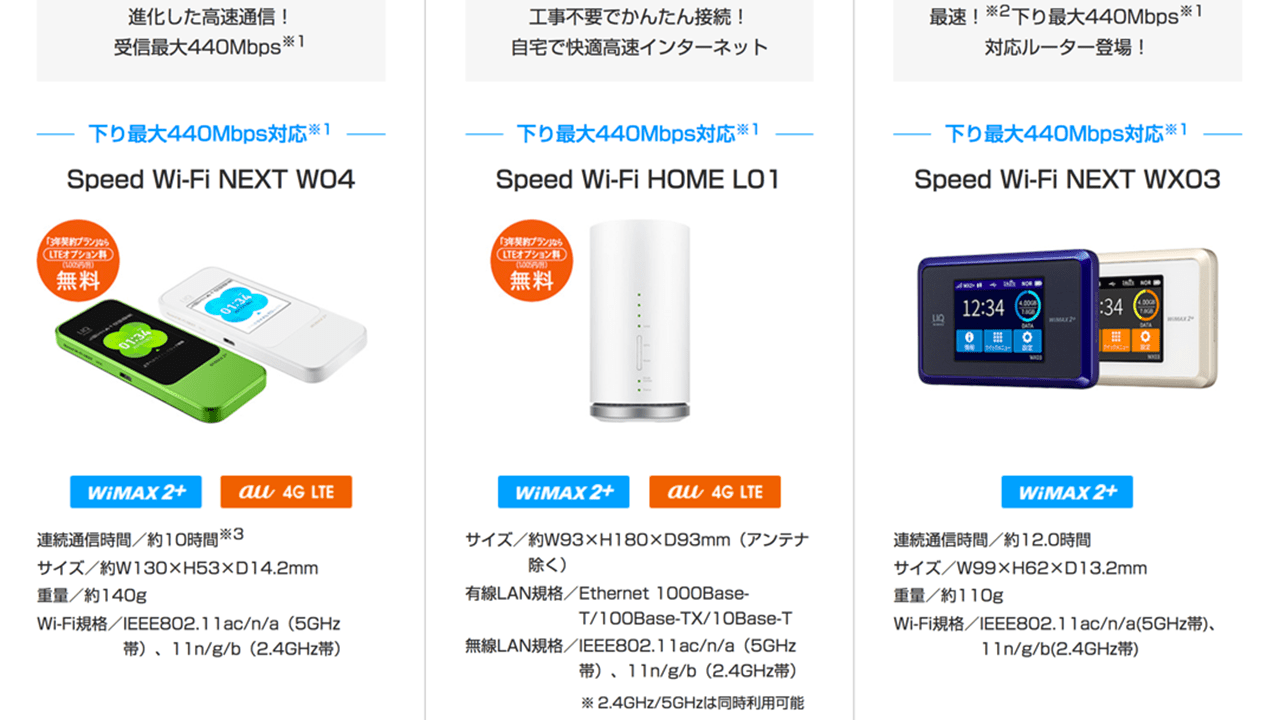
契約先を決めたら次はルーター選び。
いちばんワクワクするところ!毎日手にするものなのでじっくり選ばなければ!…と思いきやそこまで端末の種類はありません。
これから申し込むのであれば、Speed Wi-Fi NEXT W04かSpeed Wi-Fi NEXT WX03のどちらかを選べばOK!
もう1台最新機種としてSpeed Wi-Fi HOME L01がありますが、こちらは据え置きタイプ。持ち歩き可能なW04とWX03に対し、据え置き利用のL01と製品の使い方が違ってきます。
それぞれの特徴をカンタンにまとめると…
Speed Wi-Fi NEXT W04
→WiMAX 2+通信、au 4G LTE通信の2種類に対応した最新モデル
Speed Wi-Fi NEXT WX03
→WiMAX 2+通信のみだがクレードルで電波強化!バッテリー最長
Speed Wi-Fi HOME L01
→WiMAX 2+通信、LTE通信両対応&据え置き唯一最大440Mbps対応!
主要機能比較
| WX03 | W04 | L01 | |
|---|---|---|---|
| 最大通信速度 (理論値) |
下り最大440Mbps 上り最大30Mbps |
||
| 対応通信回線 | WiMAX 2+ | WiMAX 2+ au 4G LTE |
|
| 持ち歩き利用 | ◯ | ◎ 2つの通信形式 |
✕ 電源コンセント |
| 据え置き利用 | ◎ 電波拡張台あり |
◯ | ◎ 宅内特化型 |
3つとも通信速度は下り(ダウンロード)最大440Mbps、上り(アップロード)最大30Mbpsと現行WiMAXサービスの最大速度に対応。
ちなみにこれより古い機種では、それぞれ最大220Mbps/10Mbpsと対応速度は半分以下…!2017年モデルで大幅に高速化しています。
これはあくまで理論上の数値。私が使うエリア(都内)での実測値は平均30〜40Mbps程。
ただ、30Mbpsも出ていれば動画閲覧するにも十分!途中で止まってしまうこともありません。
料金プランを決める

WiMAXの料金プランは大きく分けて2種類!
ギガ放題プラン(月間データ量上限ナシ)とFlatプラン(月間データ量7GB)
※プロバイダによって微妙に呼び方が異なる
それぞれの違いはひと月あたりに利用可能なデータ量の差。
通常プランの方が使えるデータ量が少ない分、月額料金は700円ほど安くなります。
…が!!!WiMAXの魅力は月間データ量上限ナシであるギガ放題。
スマホの大容量プラン(20GB/30GB)に負けないコストパフォーマンスを誇ります。また、ほとんどのプロバイダで最初の3ヶ月間はFlatプランの金額でギガ放題を使うことができるので、はじめはギガ放題で申し込んでも損はありません。その後、使用状況によって適宜変更すれば良いでしょう。
【図解】ギガ放題の仕組み
1ヶ月間のデータ量(ギガ)に上限がないという使い放題プランですが、ひとつだけ注意点が。
当日を含まない直近3日間の合計データ量が10GBを超えると一時的な制限がかかります。
ただ、先日改定され制限時間帯は18時〜翌2時までの夜間のみになりました。そのため、昼の時間帯は実質無制限で通信可能。
ちなみに制限速度は約1Mbps上限。スマホの制限速度は128kbpsなので数値だけで見ればその10倍の速度は出ています。制限時でもSNSのタイムラインやLINEなどのチャット程度ではそこまで影響を感じさせません。
| 1日目 | 2日目 | 3日目 | 4日目 | 5日目 | 6日目 | |
|---|---|---|---|---|---|---|
| 当日データ量 | 3GB | 3GB | 5GB | 1.5GB | 2.5GB | 3GB |
| 直近3日間 合計データ量 |
– | 3GB 1日目 |
6GB 1~2日目 |
11GB 1~3日目 |
9.5GB 2~4日目 |
9GB 3~5日目 |
| 速度制限有無 | 制限ナシ | 制限ナシ | 制限ナシ | 速度制限 18〜翌2時 |
制限ナシ 夜2時〜 |
制限ナシ |
3GB/1日までであれば夜間の速度制限にかかることなく使い続ける事ができます。単純計算しても約100GB/月。
ちなみに仮に1日目で50GB使ってしまったとしても、3日間カウント対象外となる5日目には制限は解除されます。月末まで制限解除を待つ必要はありません!まさに月間上限なし!
データ量10GBの目安
上記で10GB/3日間の制限だけあるよと書きましたが、実際10GBってどのくらいなの…?
LINE(テキスト)やInstagram(画像)よりもデータ量が多いのがYouTubeなどの動画。
実際に動画再生をして、10GBの目安を調査しました!
Netflixやhuluなどで海外ドラマにハマる方も増えてきています。休日に見始めると一日があっという間に終わる…笑
海外ドラマ1話(約45分)を高画質再生するとデータ量は約600MB程。YouTube(10分)のHD再生では約120MB程。
単純計算、10GBというのは海外ドラマ16話分、YouTube83回分ということになります。
※動画やコンテンツによってデータ量は違うのであくまで参考までに。
まとめ
ザーッと一気にまとめましたが、こちらがWiMAXを申し込むまでに必要な流れ+@です。
詳細はこういったWiMAX キャンペーン情報サイトをご確認ください。
申し込み前の面倒なことはちゃちゃっと済ませ、速度制限から解放された快適なインターネット生活を過ごしましょう!!